I'm a San Francisco based designer, most recently wrapped up a 10 year career at Meta. With over 20 years of experience, I'm a designer who stays close to the people problems and thrives with complexity.
Having scaled products that a third of the globe relies on daily, I help teams turn data into actionable insights that change behaviors. Having built an internal tools team culture from the ground up, I demonstrate the unique value design brings to the table. I have tweaked feature iterations and design experiments with clear hypotheses, as well as defined brand new 0-1 experiences for bespoke needs and complex compliance processes.
My operation principles
Focus on the people problems / Start with constrains / Detail & accuracy matters
Understand how it's made / Connect design to the business
Do what makes your job harder, but makes others easier
What
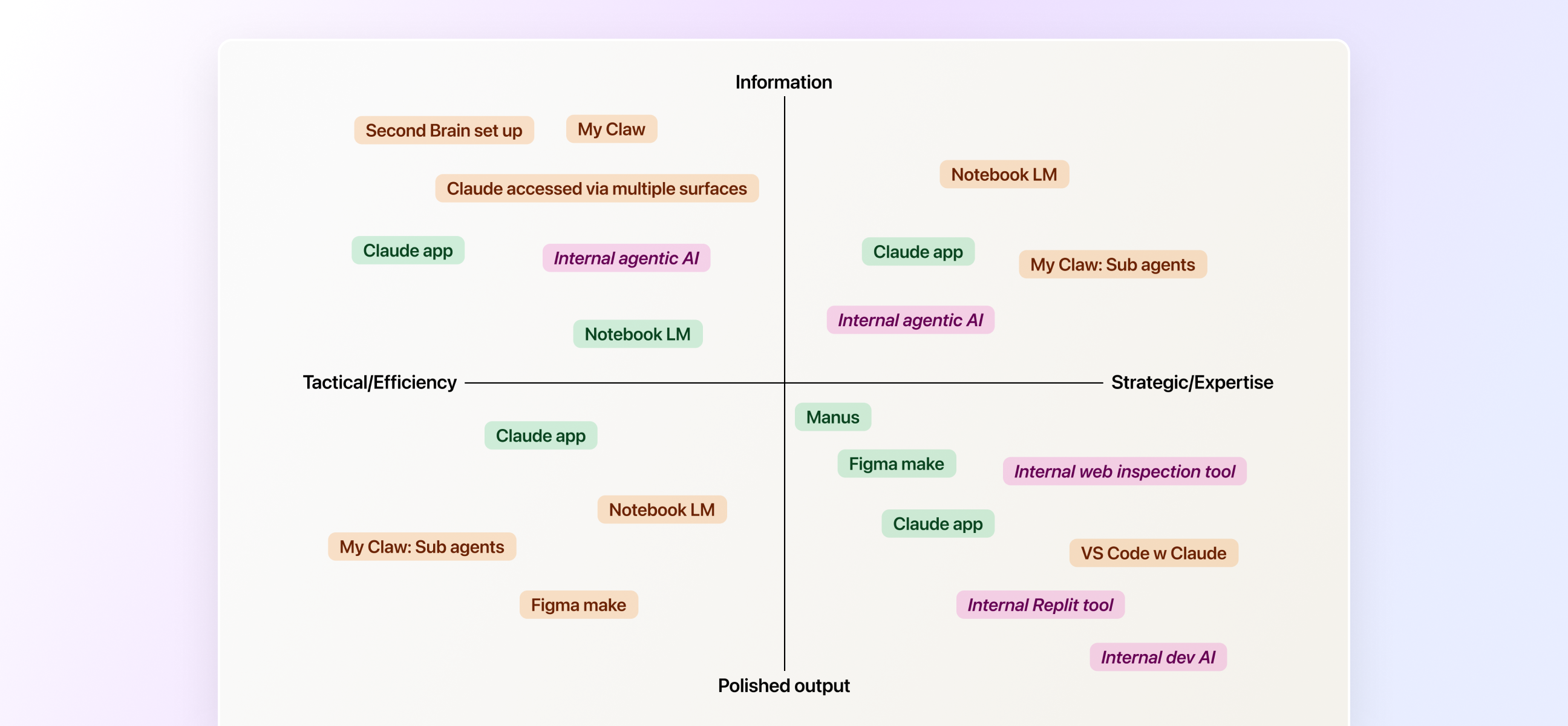
Recognizing the choice paralysis caused by the rapid explosion of AI tools across the market, I published an internal prioritization playbook. This framework gave people a clear baseline to evaluate new technology/tools, helping team or individuals make decisions on where to make their investments.
What
"The late AI adopter's cheat sheet to catch up." Recognizing the choice paralysis caused by the rapid explosion of AI tools across Meta, I published an internal prioritization playbook. This framework gave teams a clear baseline to evaluate new technology, helping them align on which AI tools to adopt and master.
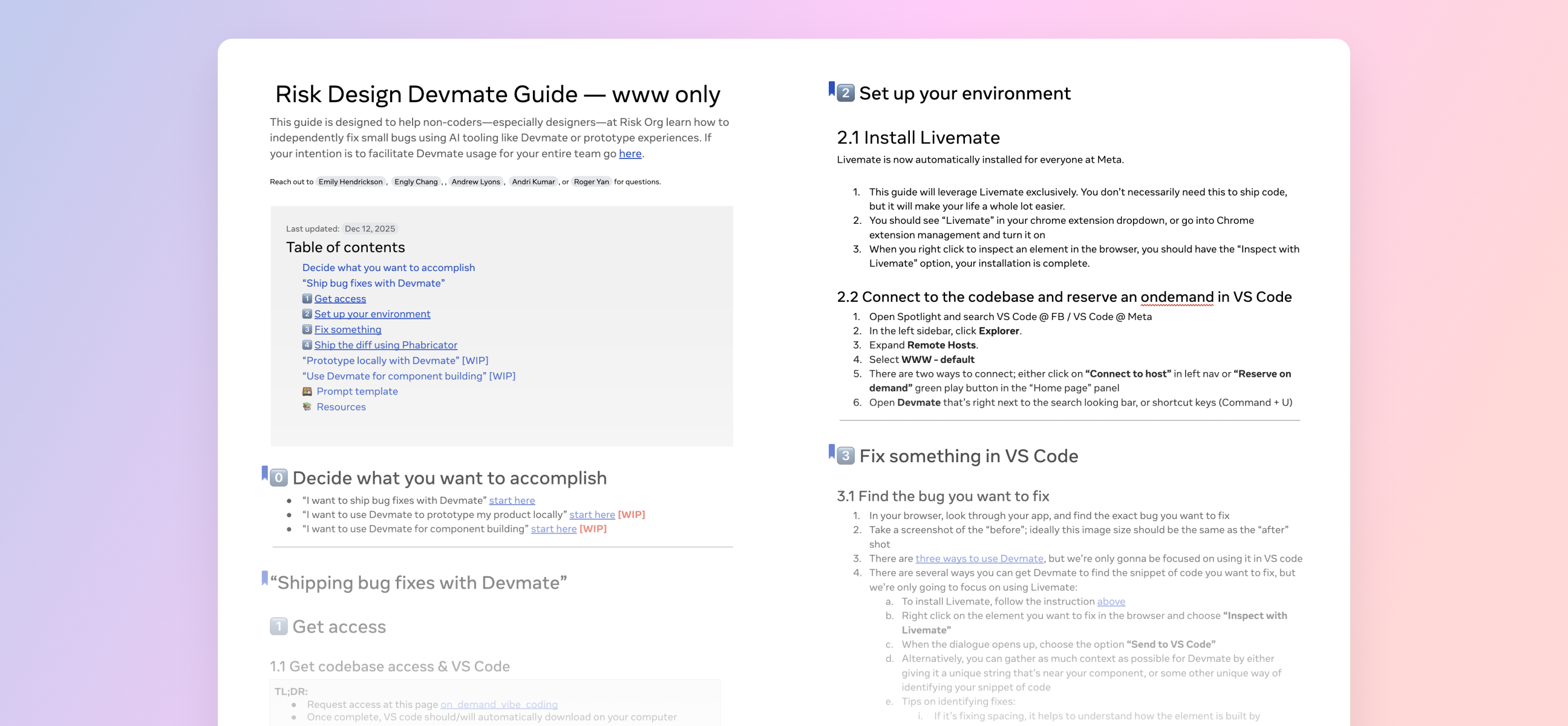
Authored a guide aimed to help non-technical people ship code. I also ran a 3 hour workshop that helped people use the guide, which resulted in 100% of "designers" (Product Designer, Content Designer and User Researchers) shipping production code.
Impact
100%
xDesigners shipped within the team
What
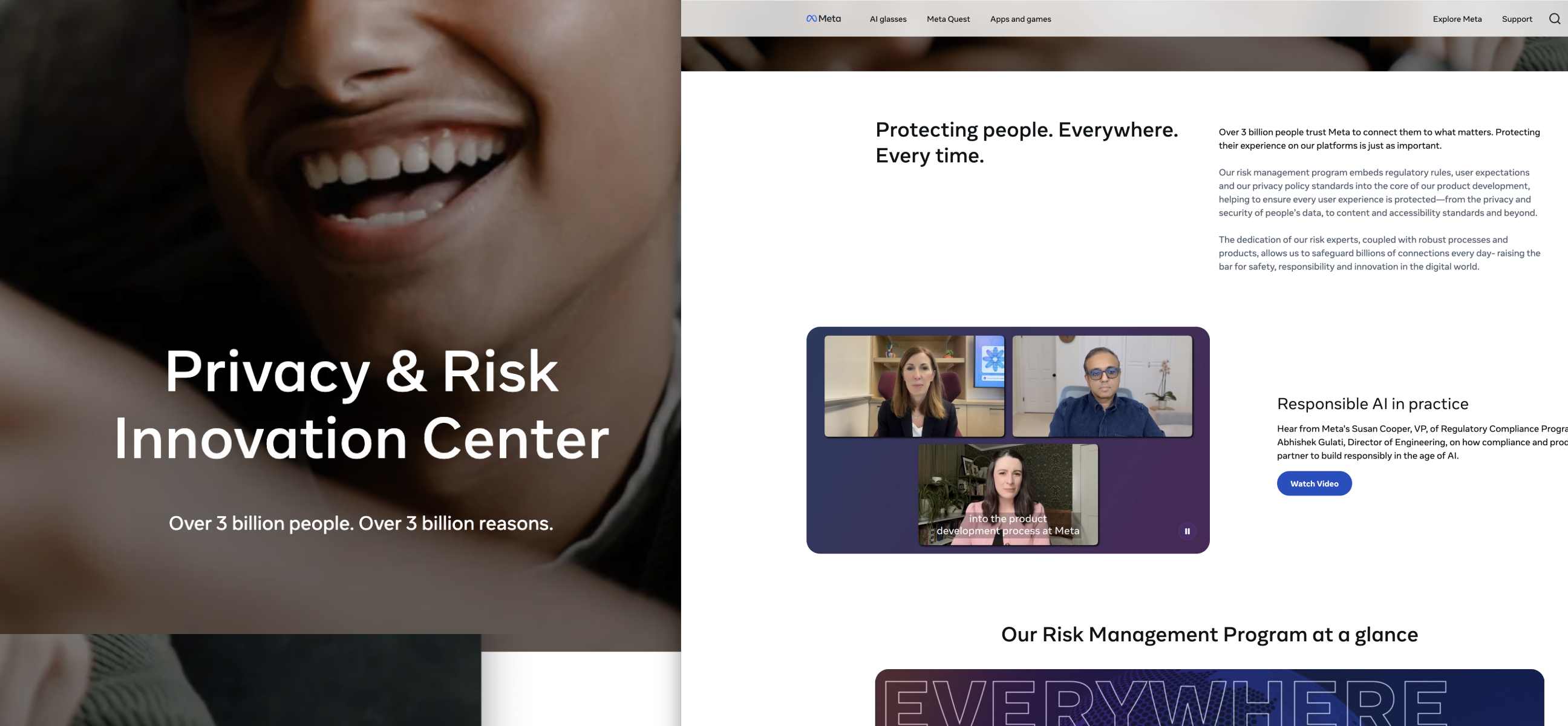
Leveraging an internal AI tool, built a tightly scripted product prototype for an external webinar illustrating the direction the product team is heading.
Meta Privacy & Risk Innovation Center →Impact
14 days → 3 days
Turn around time in comparison to typical 2 week turnaround
Problem to solve for
Risk review tends to be complex and with terms that the average person might not understand. As the platform moves towards automation, the hypothesis of integrating a trained AI modal that understand risks, could help improve people's understanding overall.
What
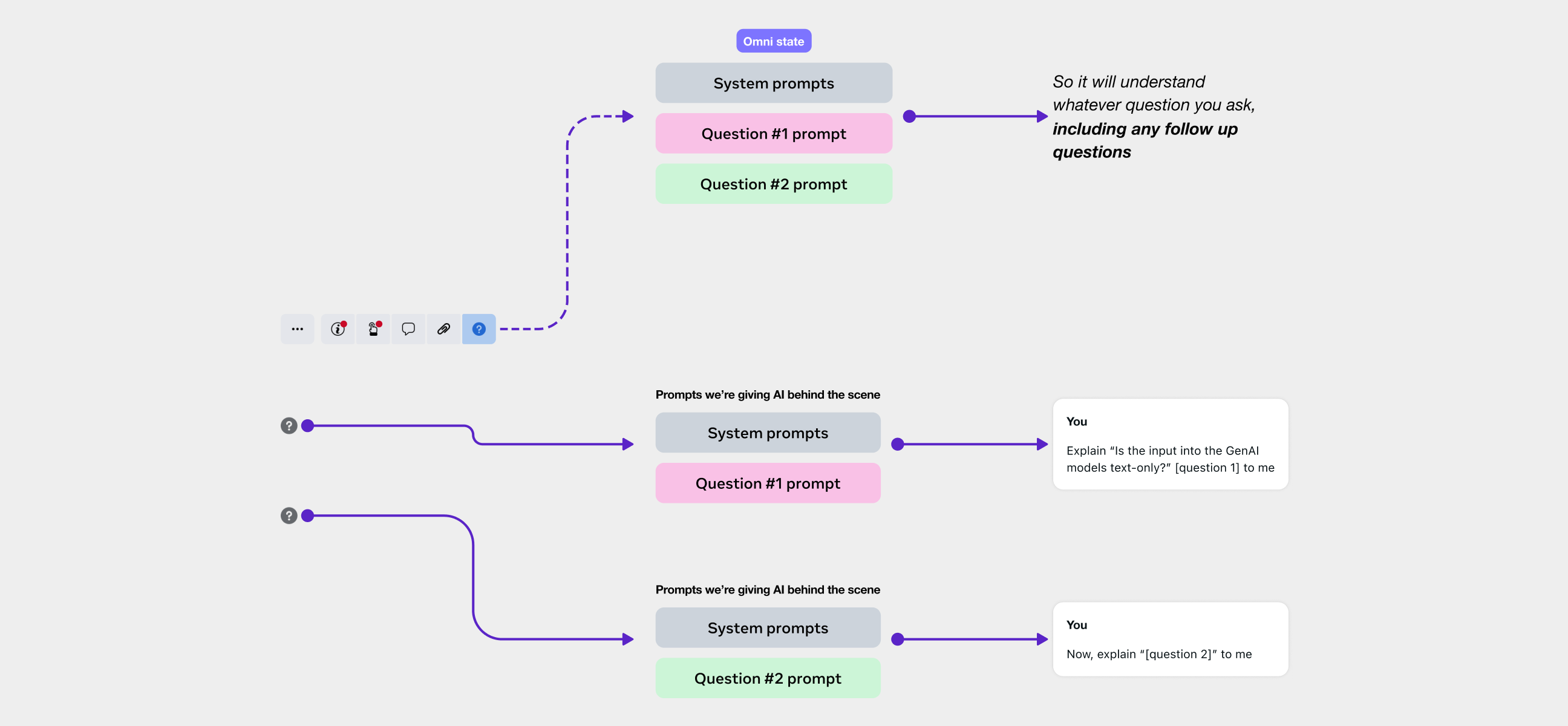
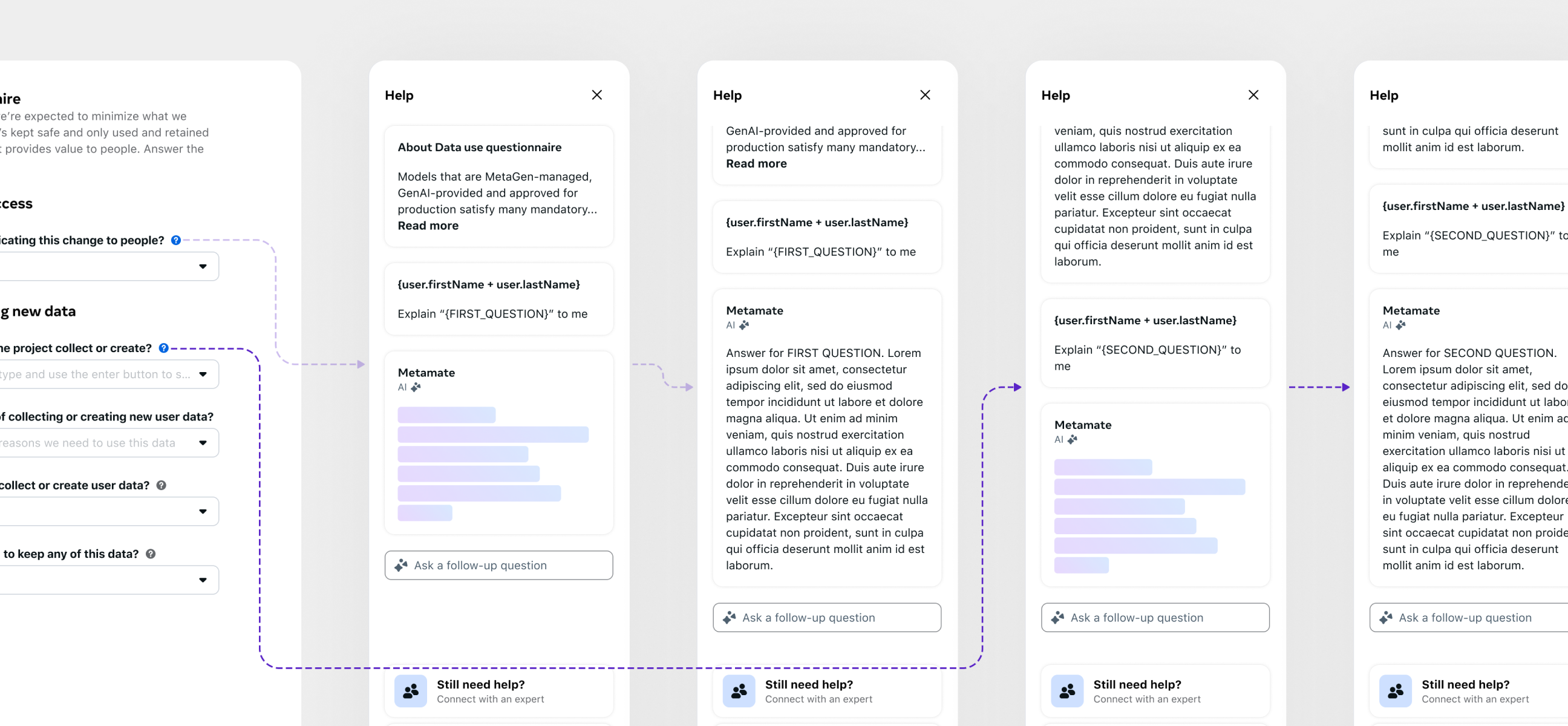
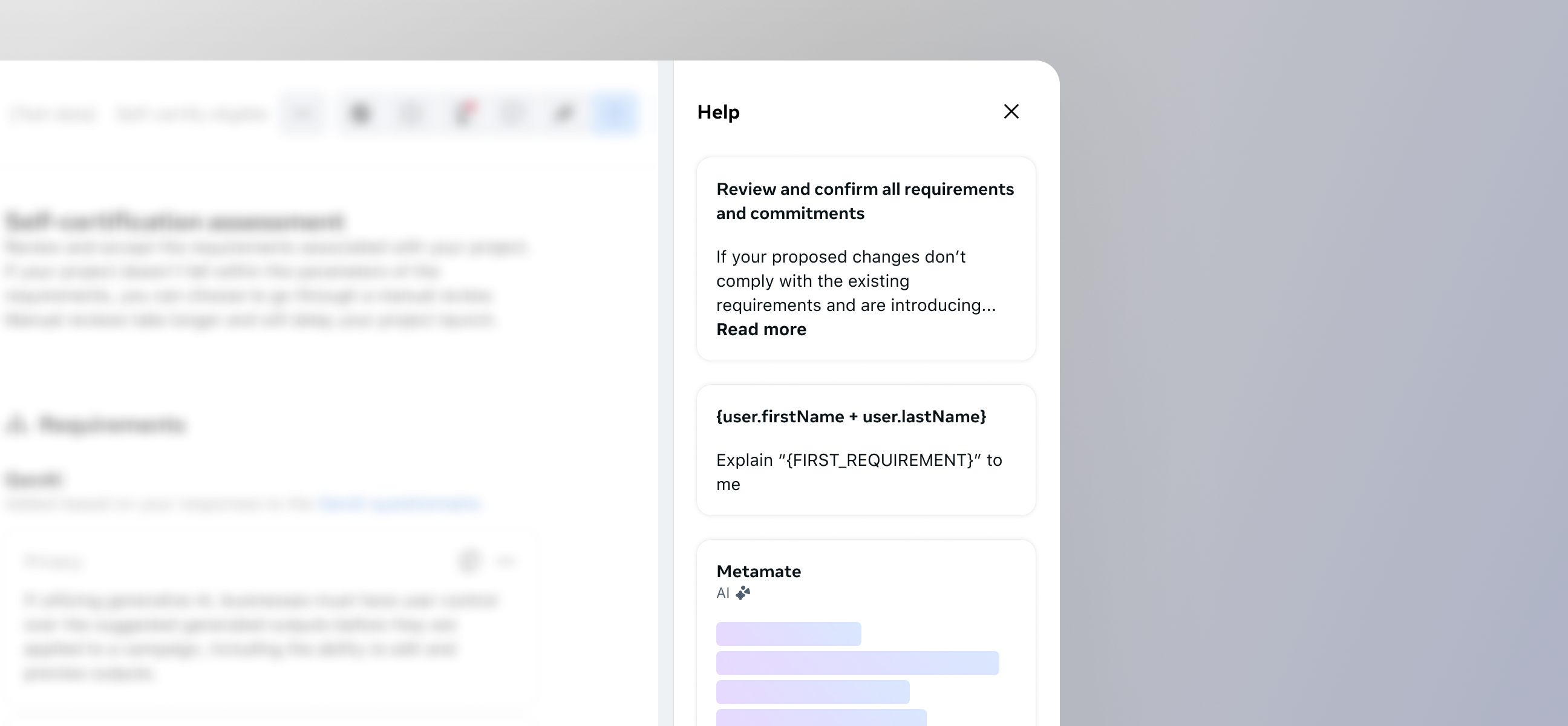
Foundations in the Risk Org owns the tool that every team at Meta has to use for risk assessment in order to launch any feature. Led design and on-time launch of Help AI Agent, advocating for platform retention to better understand user needs. Identified need for "omni-state" through comprehensive flow exploration.
Impact
100% launch
Design to ship in ~3 weeks
What
Prompt construction–three use cases covered for a comprehensive end to end experience with three types of entry points.
Insight
Omni state
Discovery and design of initial "omni state" made subsequent pivot more efficient
Problem to solve for
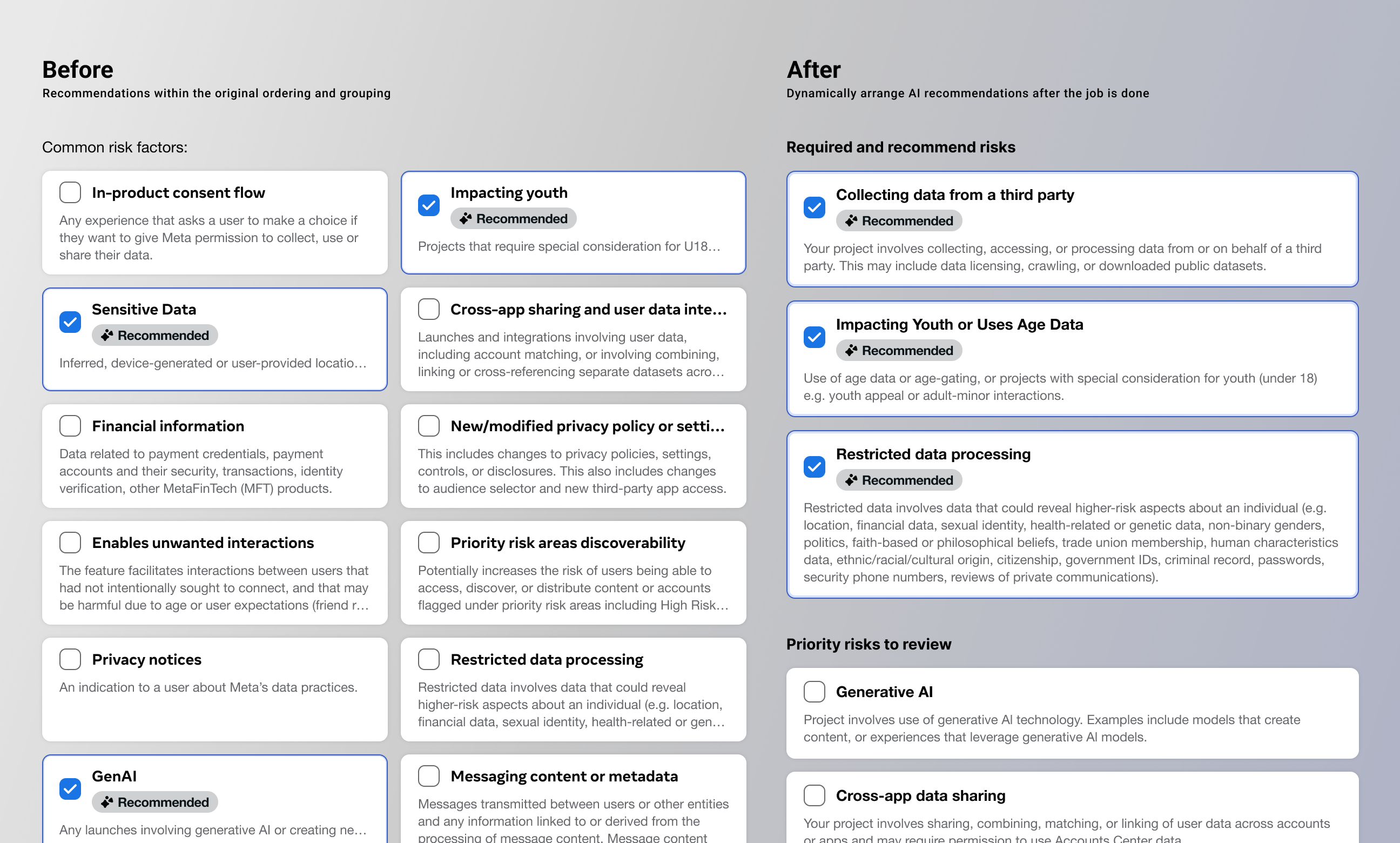
Since AI recommendations were introduced, we were seeing a problem where people assumed all factors have were scanned by AI but they're not. Risks were missed with a higher rate with recommendations—we set out to solve this with design while the AI model improves.
What
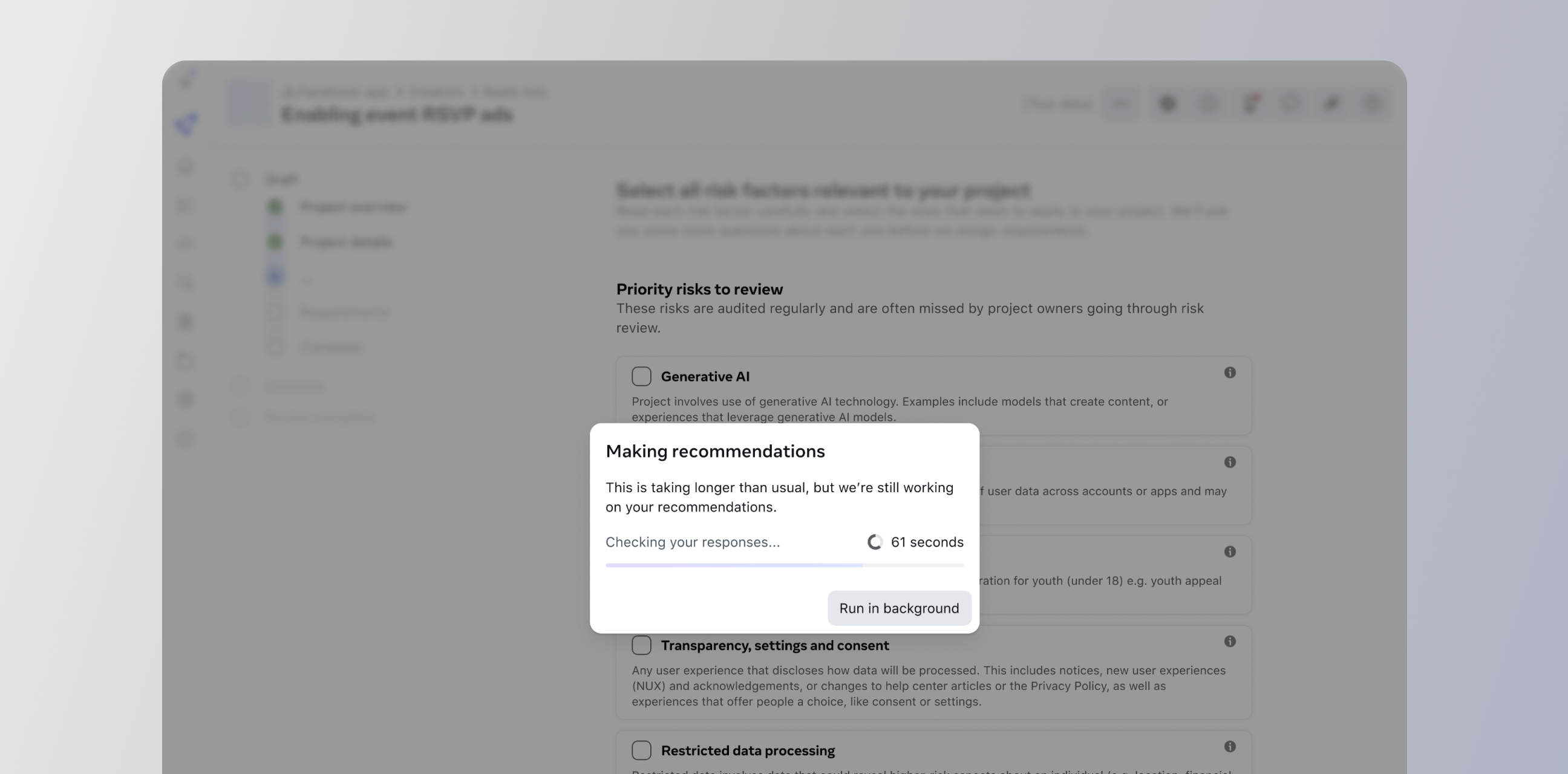
Update design to help risk factor understanding, expanded explanation and dynamic categorization and organization. Optimize design for AI run latency and communicate to users where they are in the process.
Impact
~17% ⟶ ~5%
Failure rate reduced reduction across shipped features
Problem to solve for
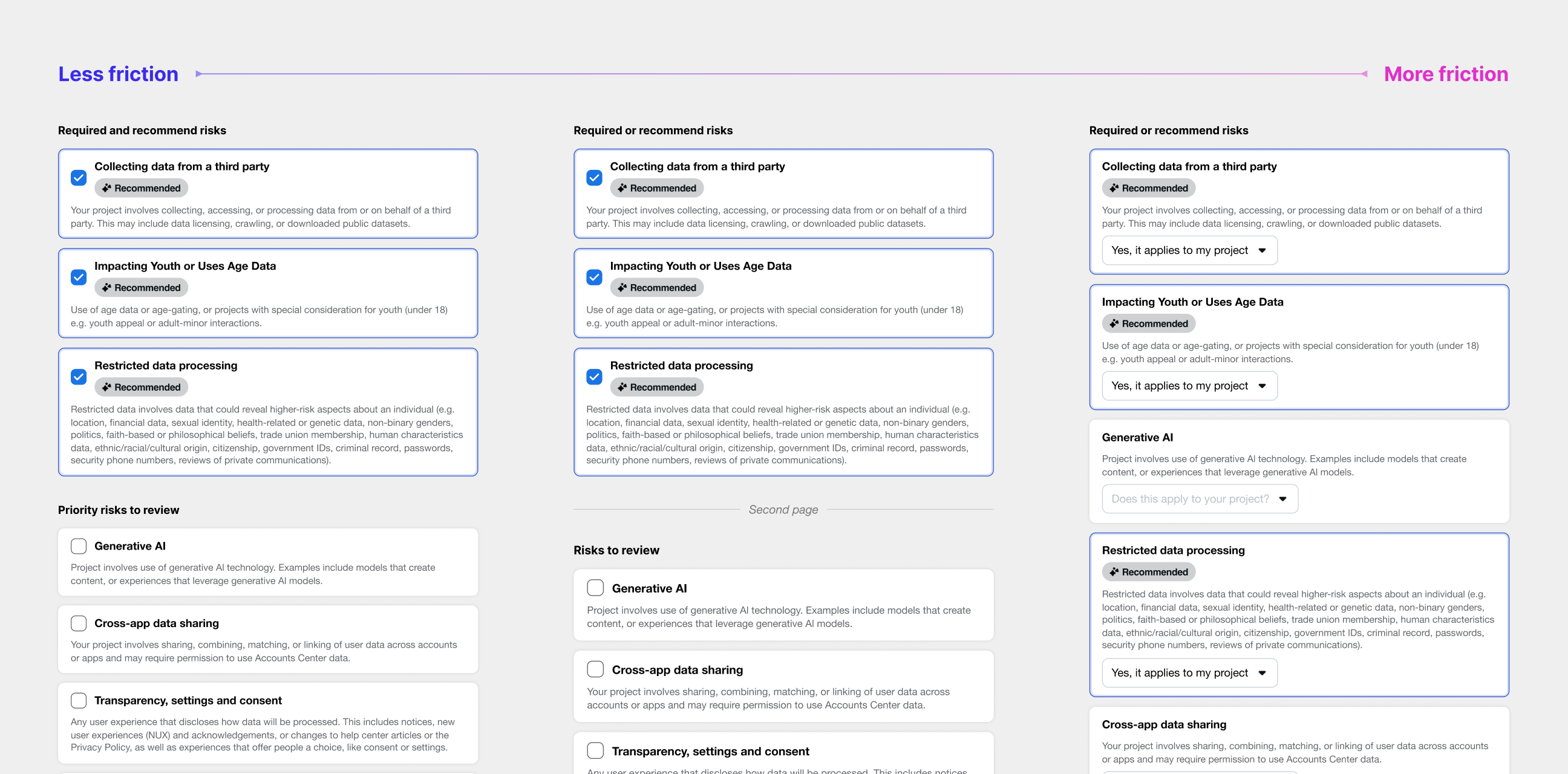
Update design to help risk factor understanding, expanded explanation and dynamic categorization and organisation. A range of explorations are done from less friction to most engagement needed from the users.
Impact
11%
Decrease in failure rate from risk factors page redesign
Problem to solve for
The improvements are aimed to help users understand AI automation better, and complete the complex review they need to go through with more accuracy. While it's a suite of end to end features, the main surface is on the page product owners has to review if a risk applies to their project.
Impact
21%
Reduction in audit fail rate through AI latency improvements
What
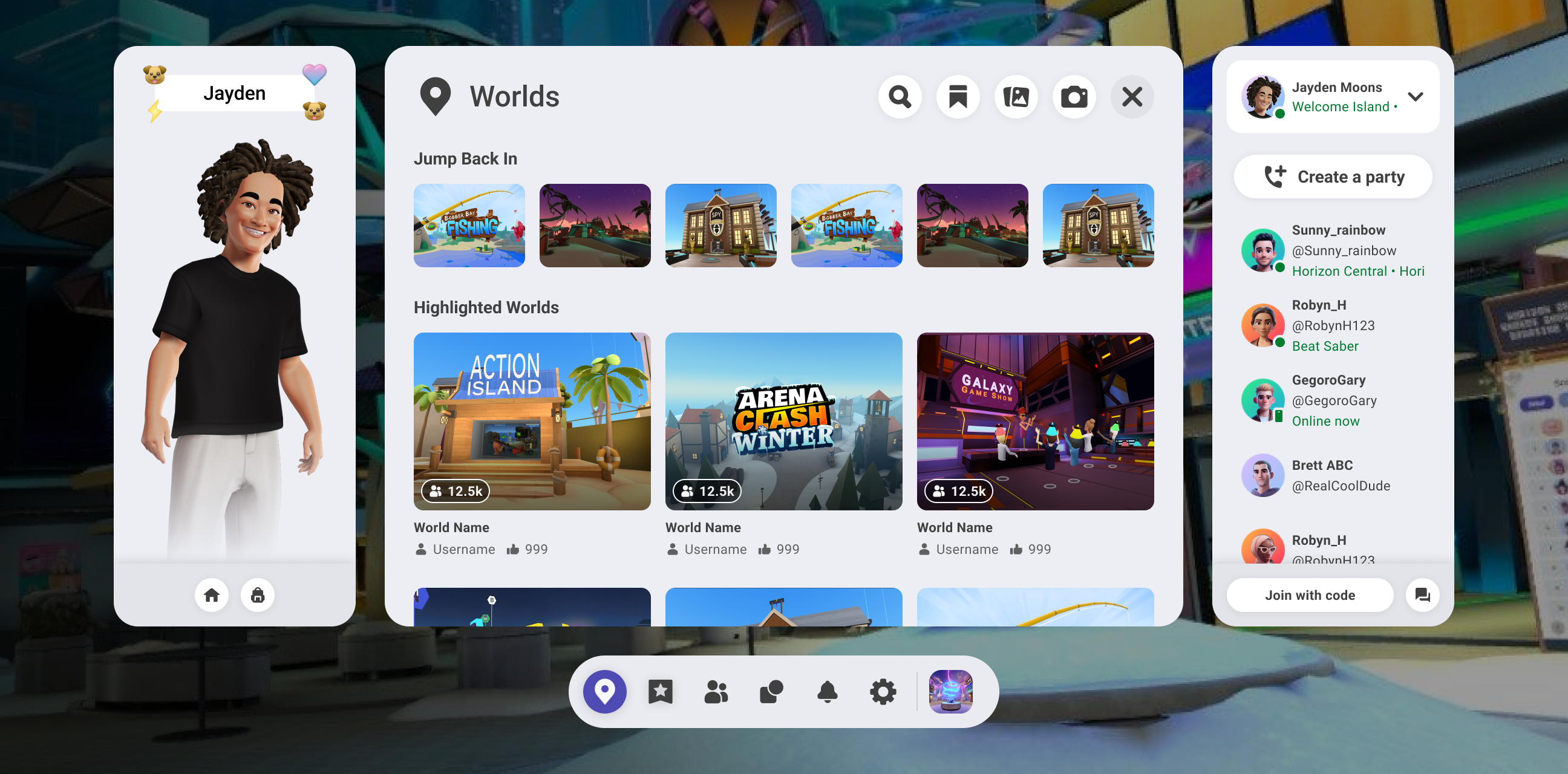
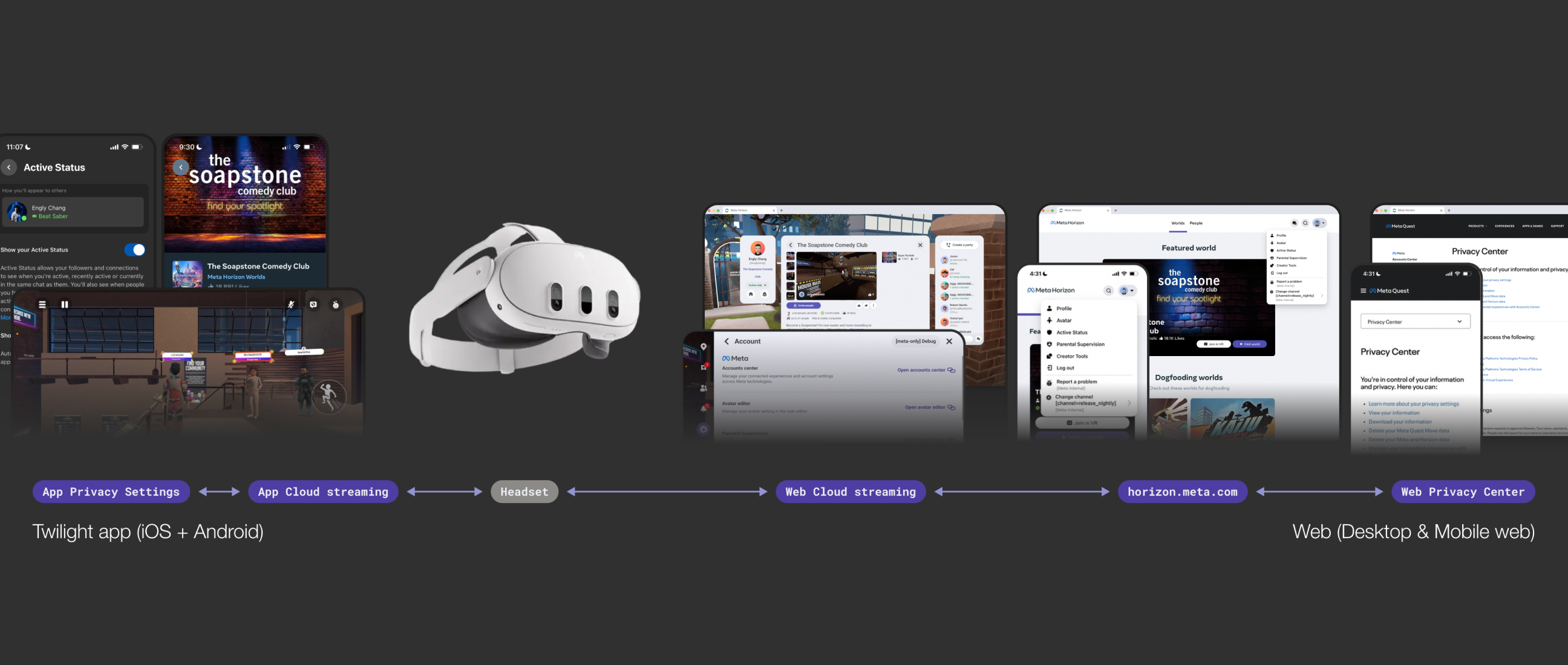
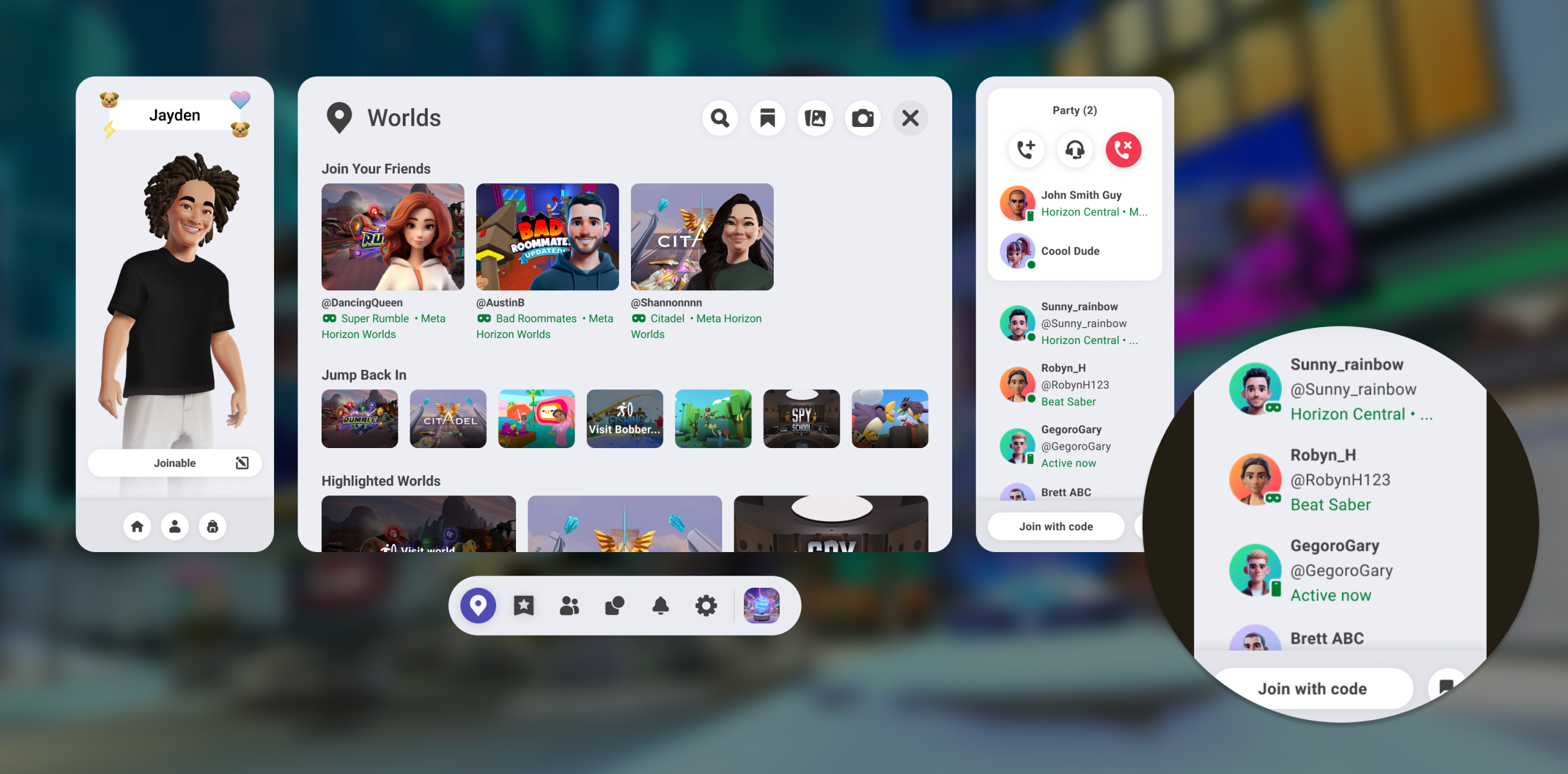
In 2024, Horizon's social systems began merging with Quest OS. Horizon Worlds gained priority access to core social surfaces, and design work was needed to bridge the gap while helping people transition smoothly.
Problem to solve for
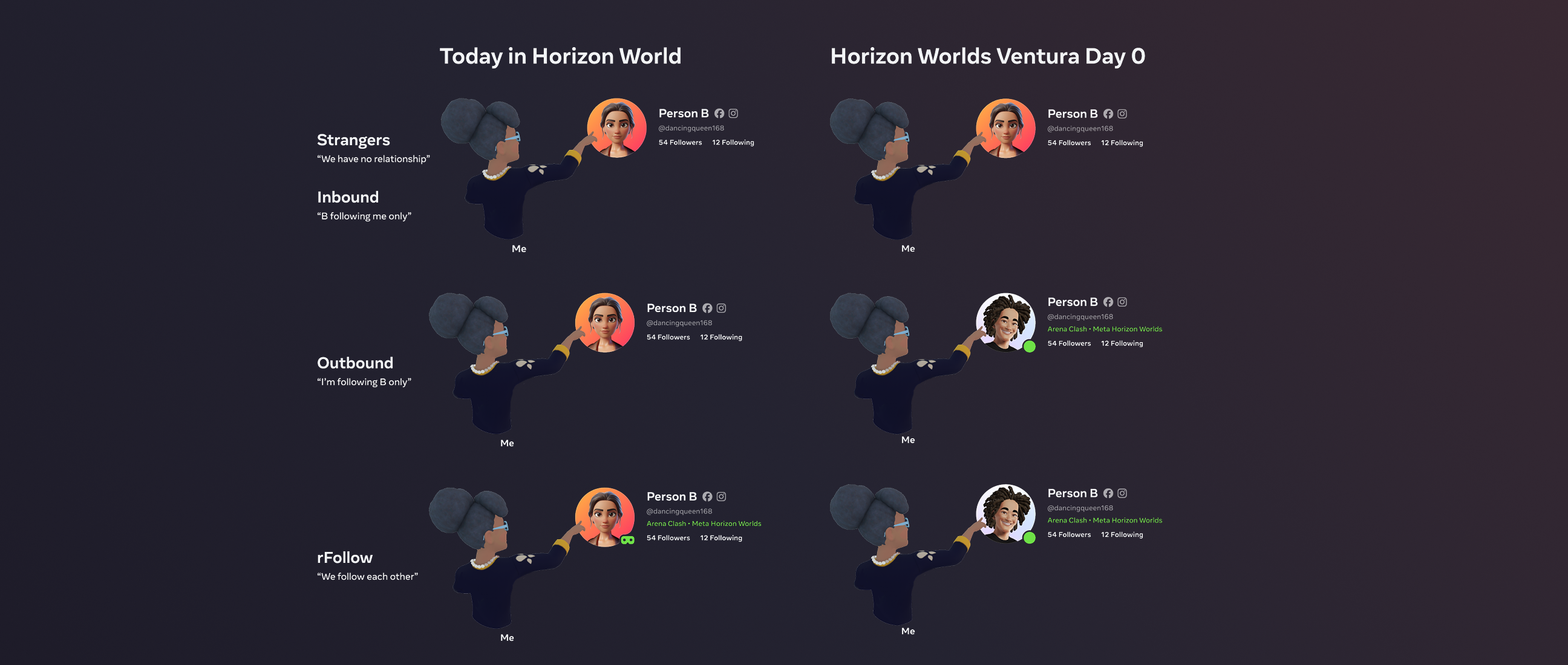
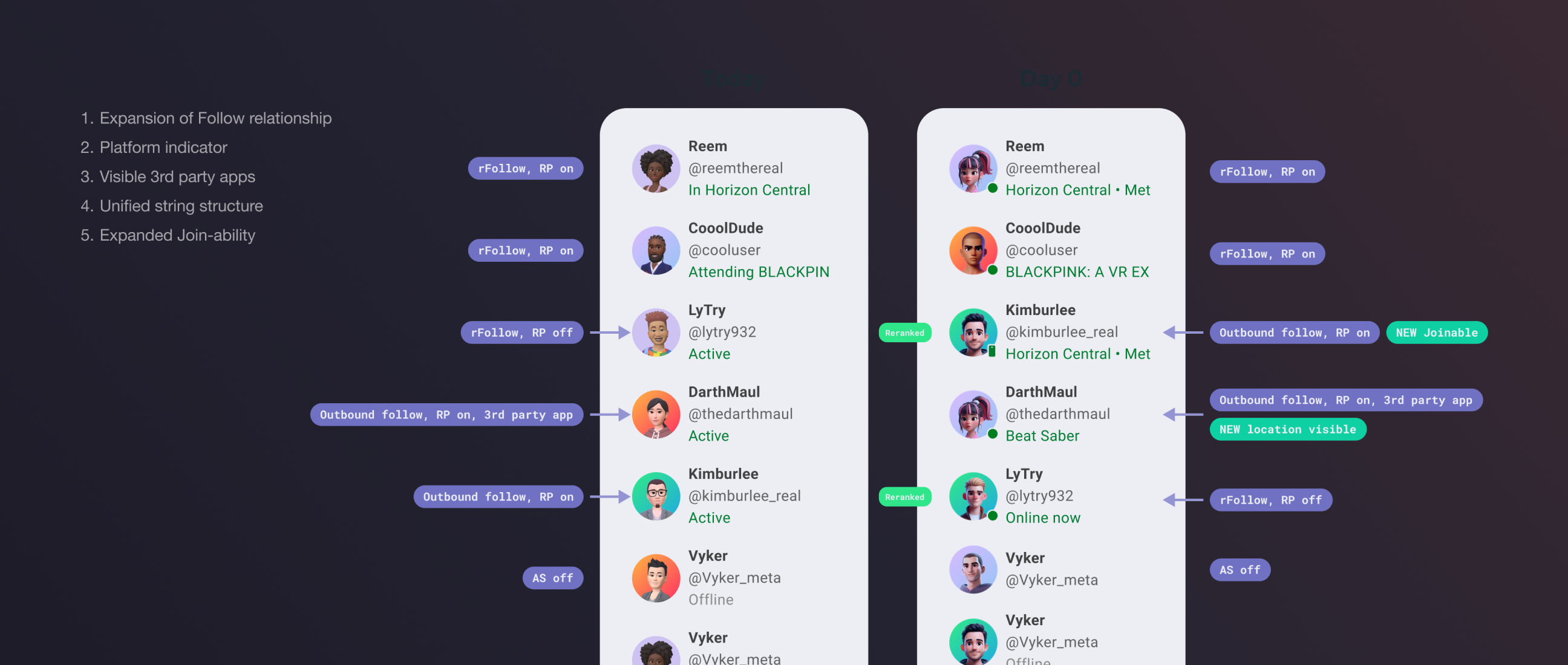
Across VR and Horizon Worlds, many product surfaces — avatar, friends, privacy — existed in duplicate. Part of the effort involved migrating services already built for Facebook and Instagram.
Impact
70%
VR OS integration for the unified friends flow
Neutral
Privacy migration launch landed with neutral engagement impact
What
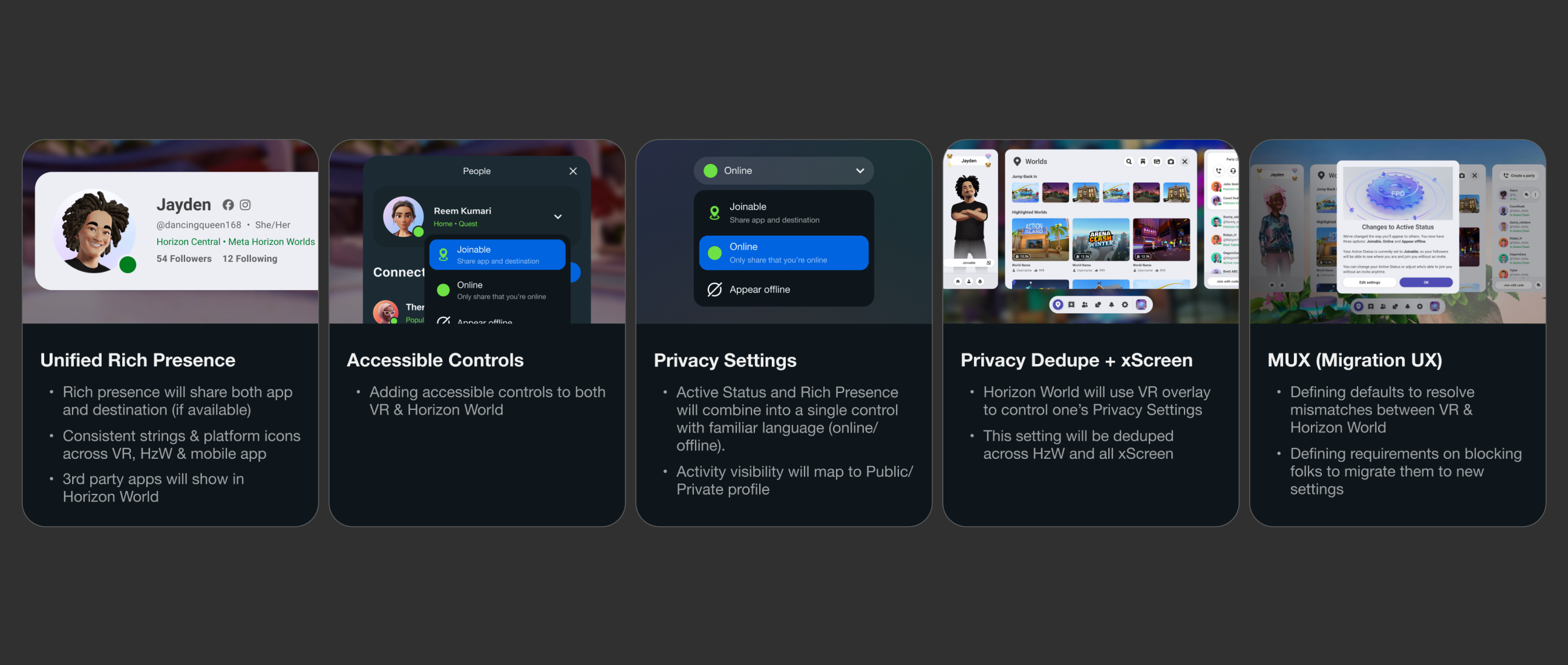
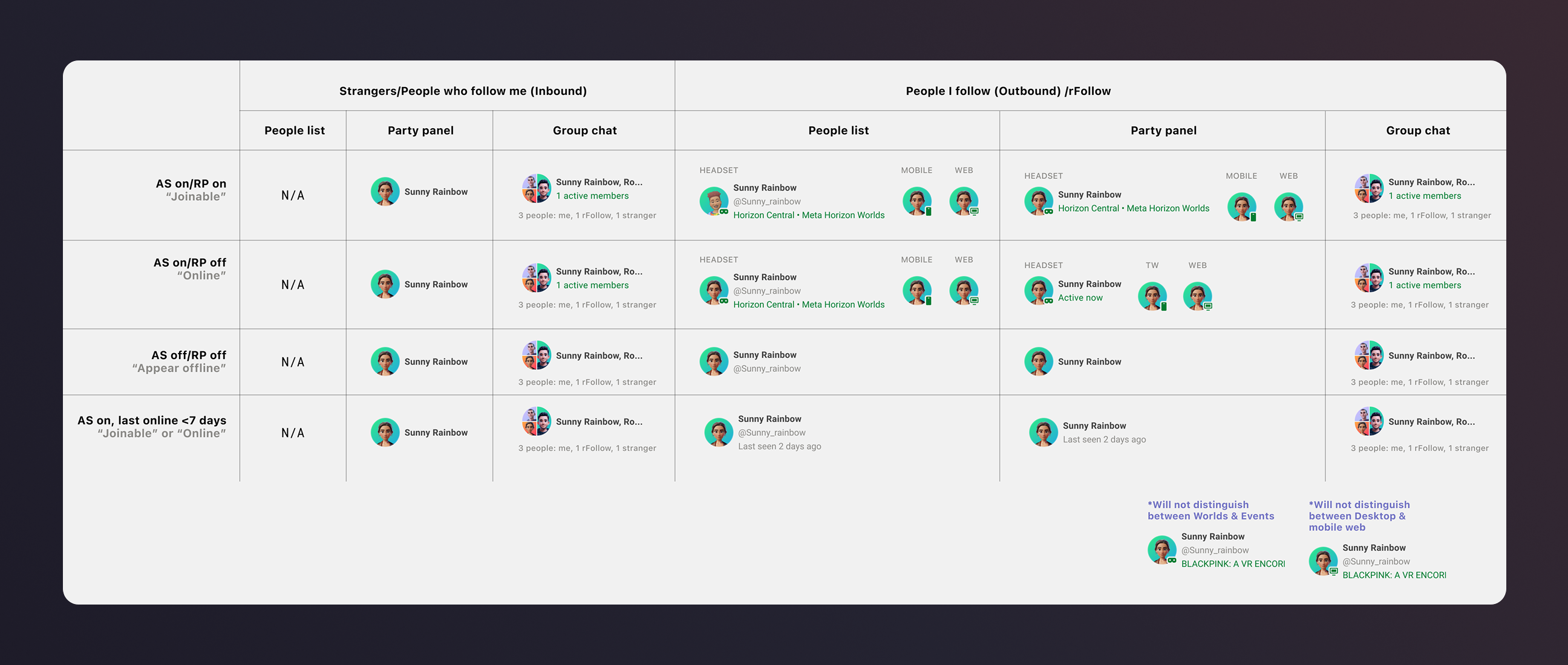
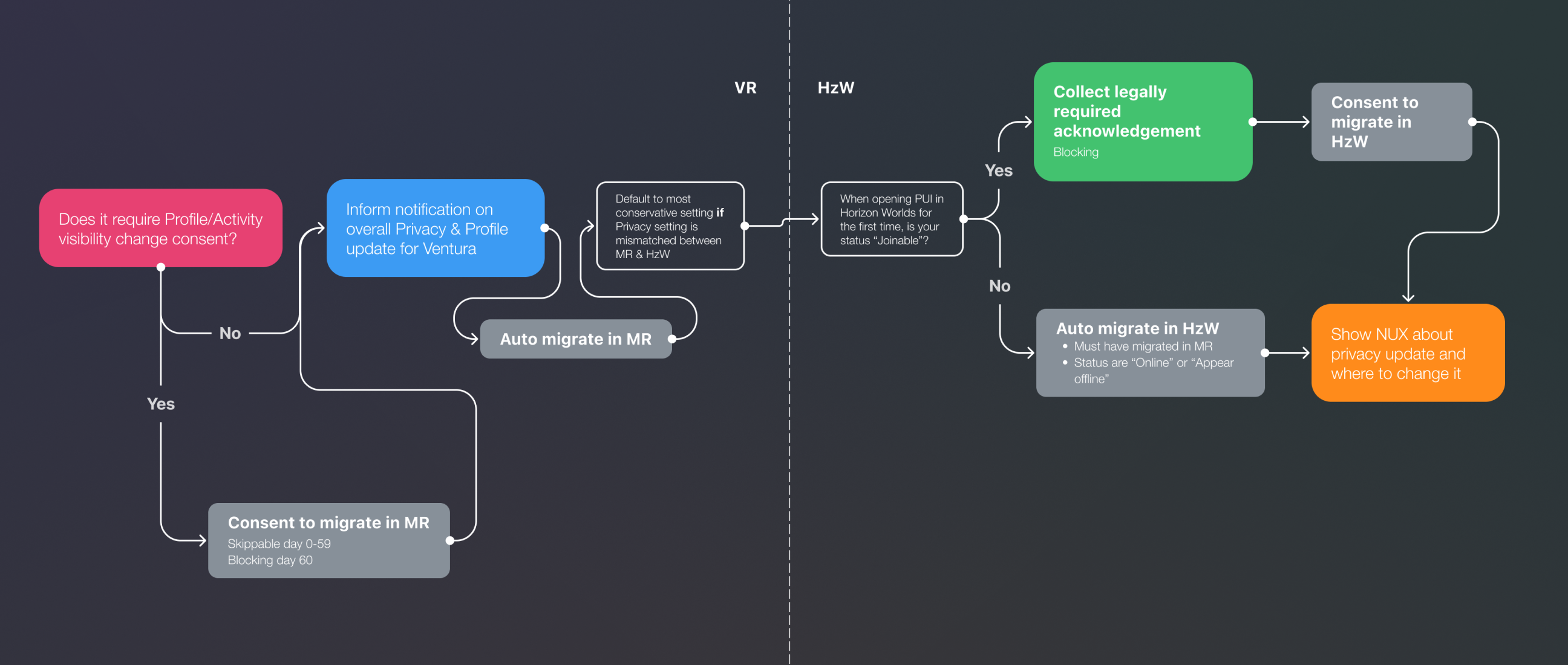
Unifying how people navigate between the Privacy Hub and Quest OS surfaces into a single, consistent presence model.
What
Aligning Horizon Worlds identity as the shared surface that Quest OS privacy settings route through.
What
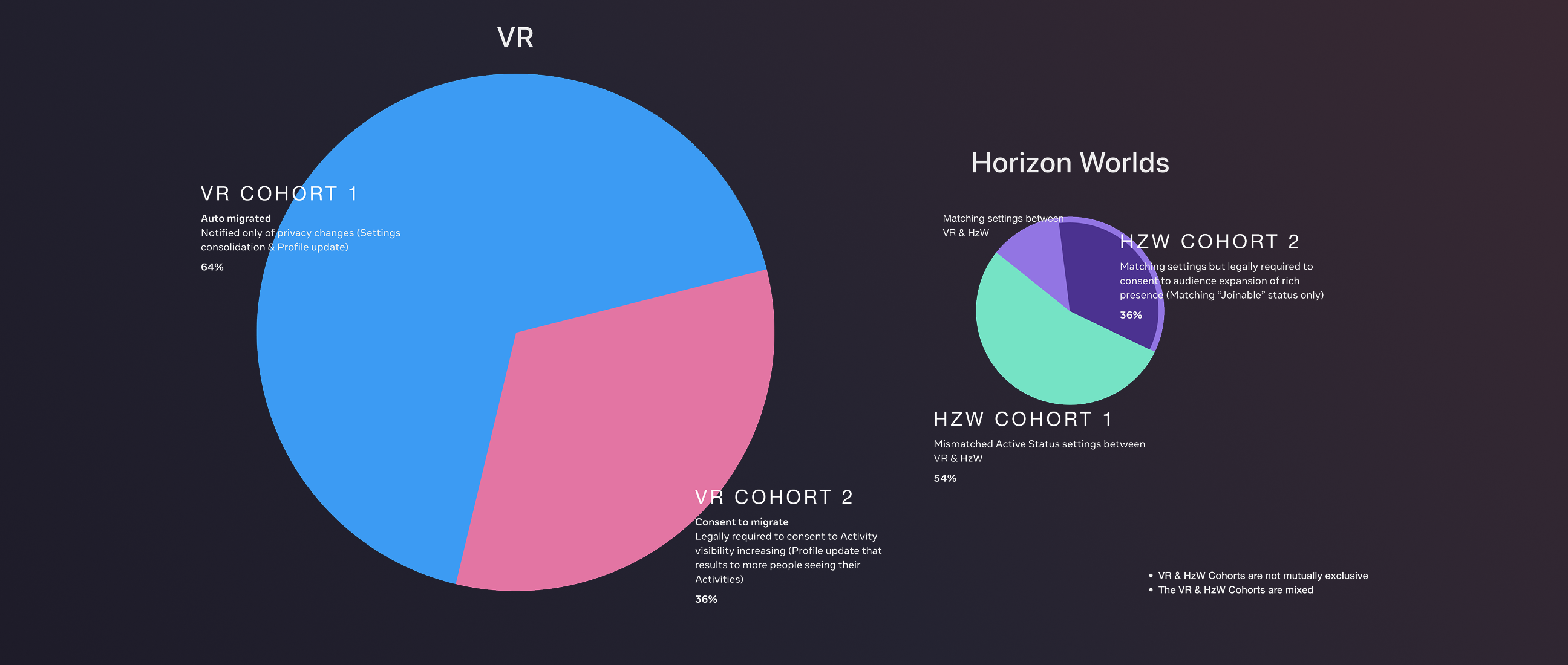
Mapping the phased rollout from kickoff through headset availability to general release.
What
Structuring how new cohorts are introduced to each other as they onboard into Horizon Worlds.
What
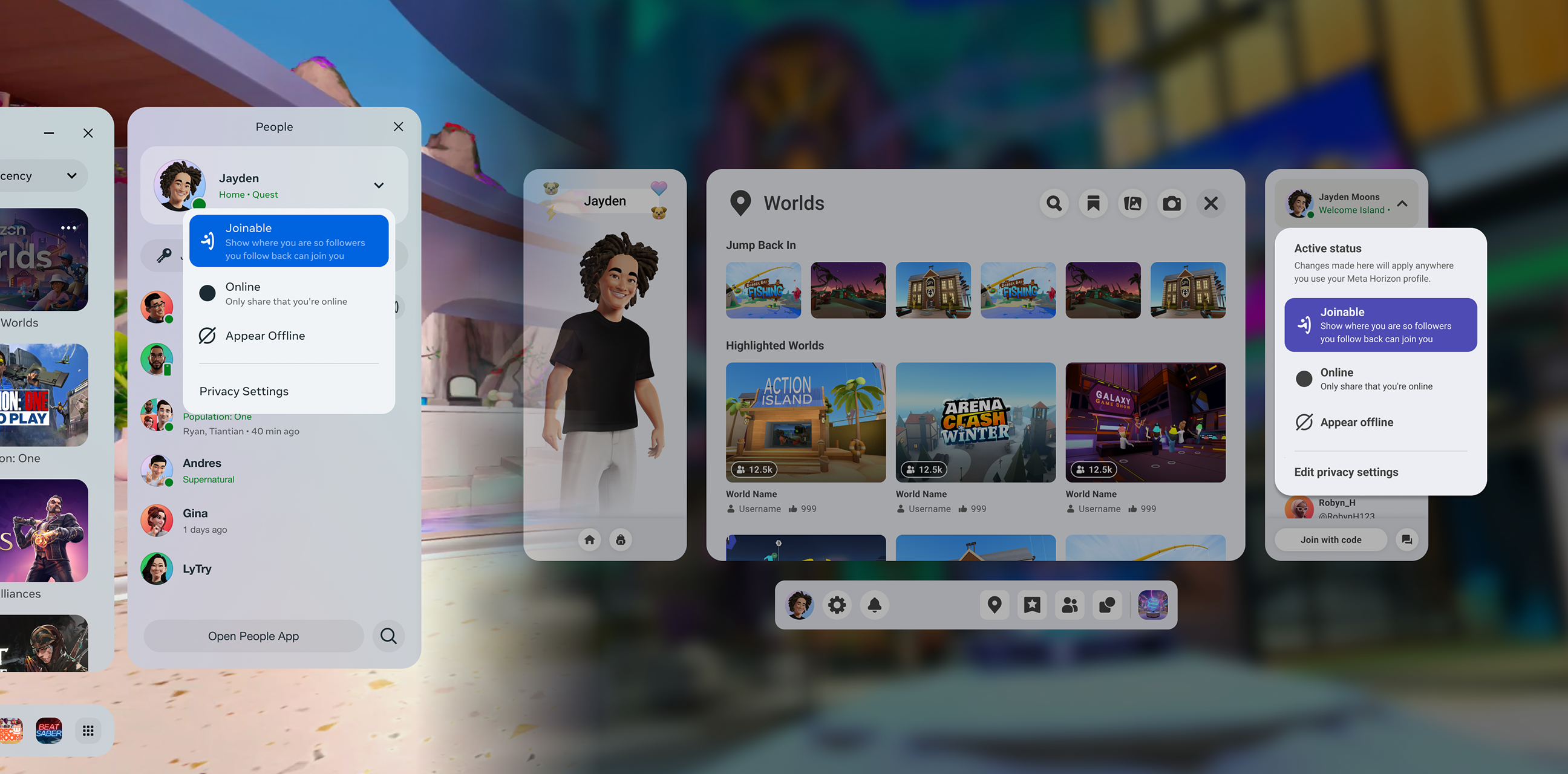
Bringing the new unified privacy model directly into the Horizon Worlds surface, so people encounter it in context rather than in a separate settings flow.
What
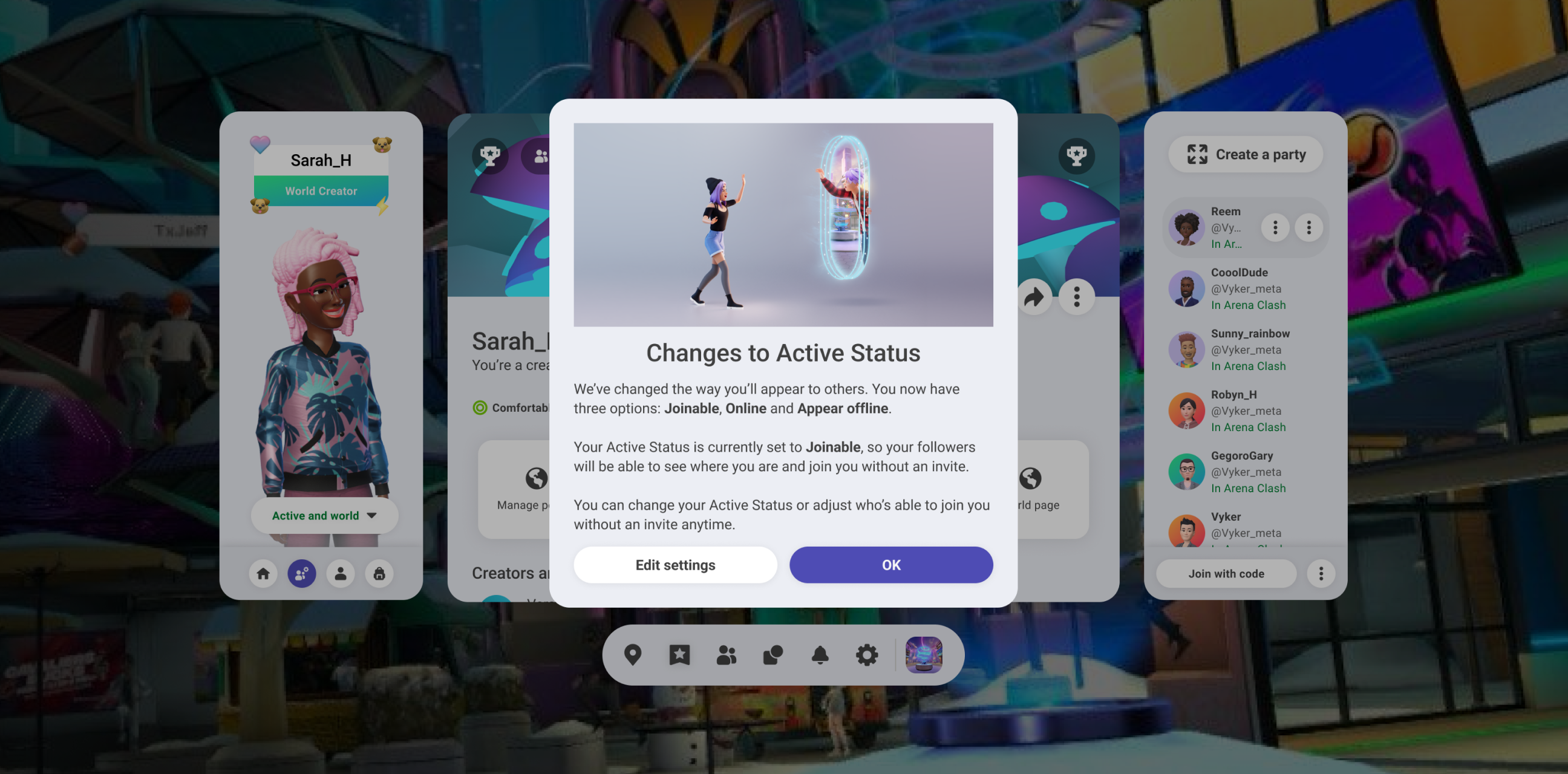
Extending the privacy migration to VR globally, with a confirmation step so people understand what's changing to their Active Status before continuing.
What
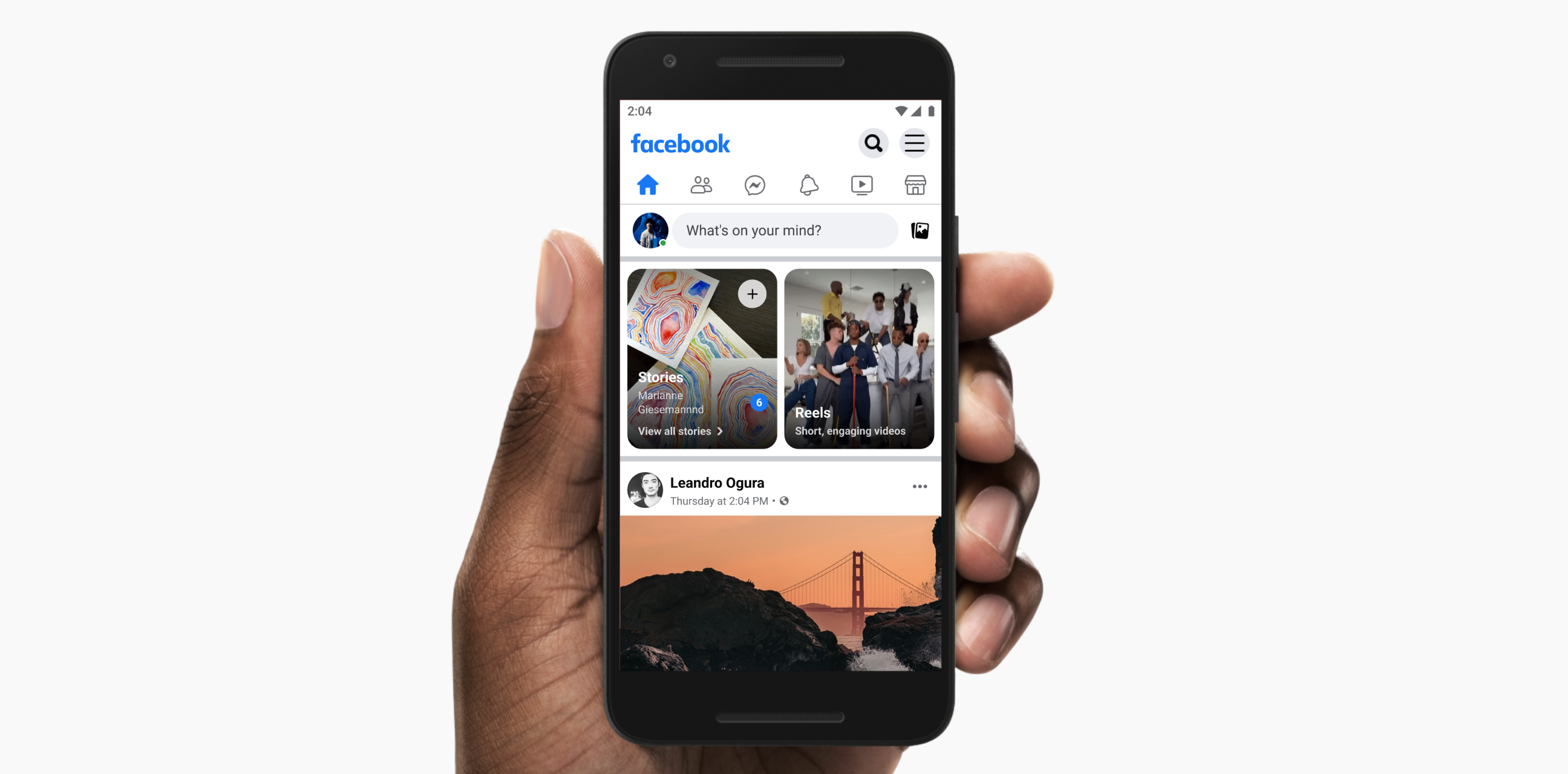
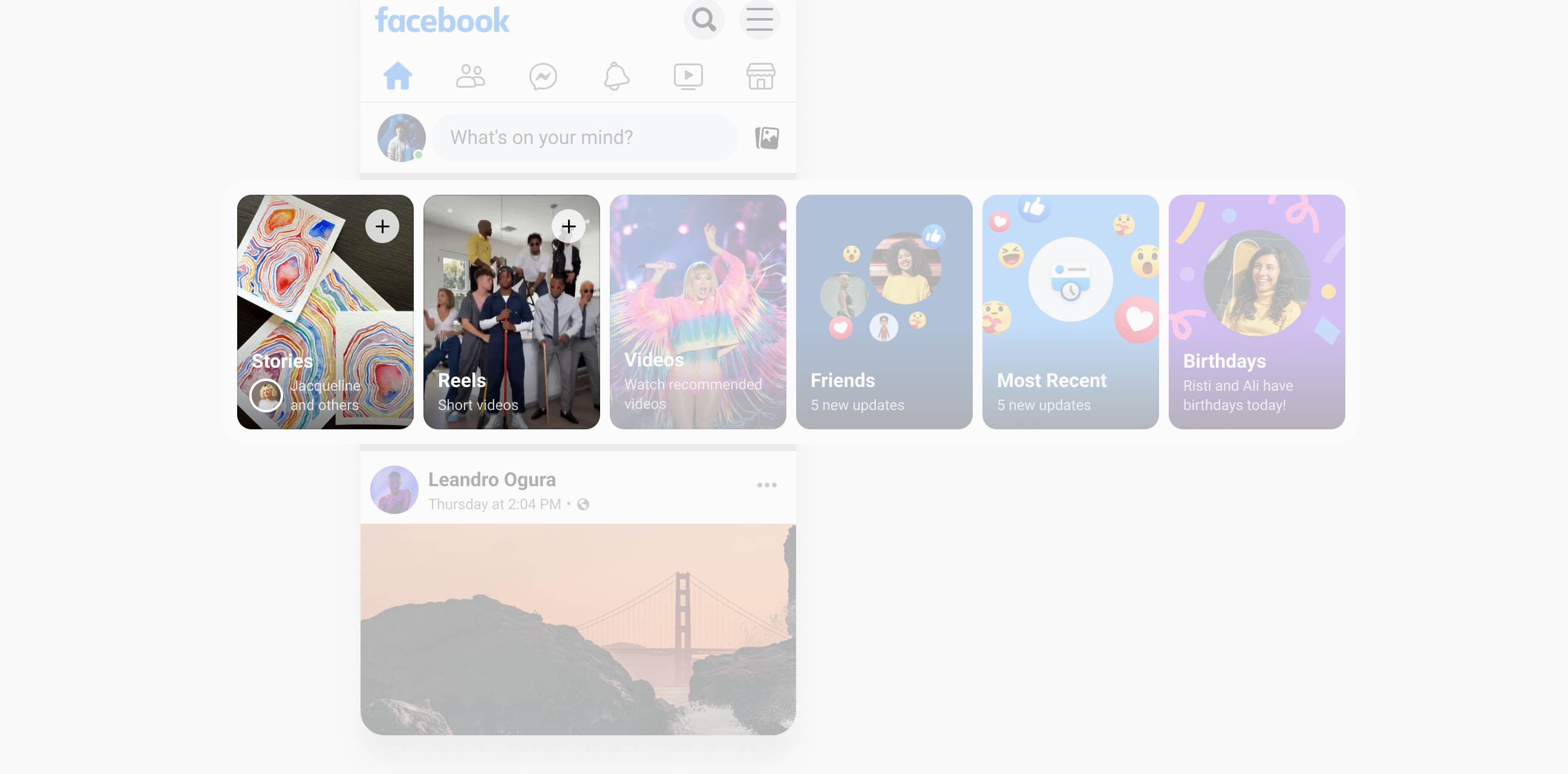
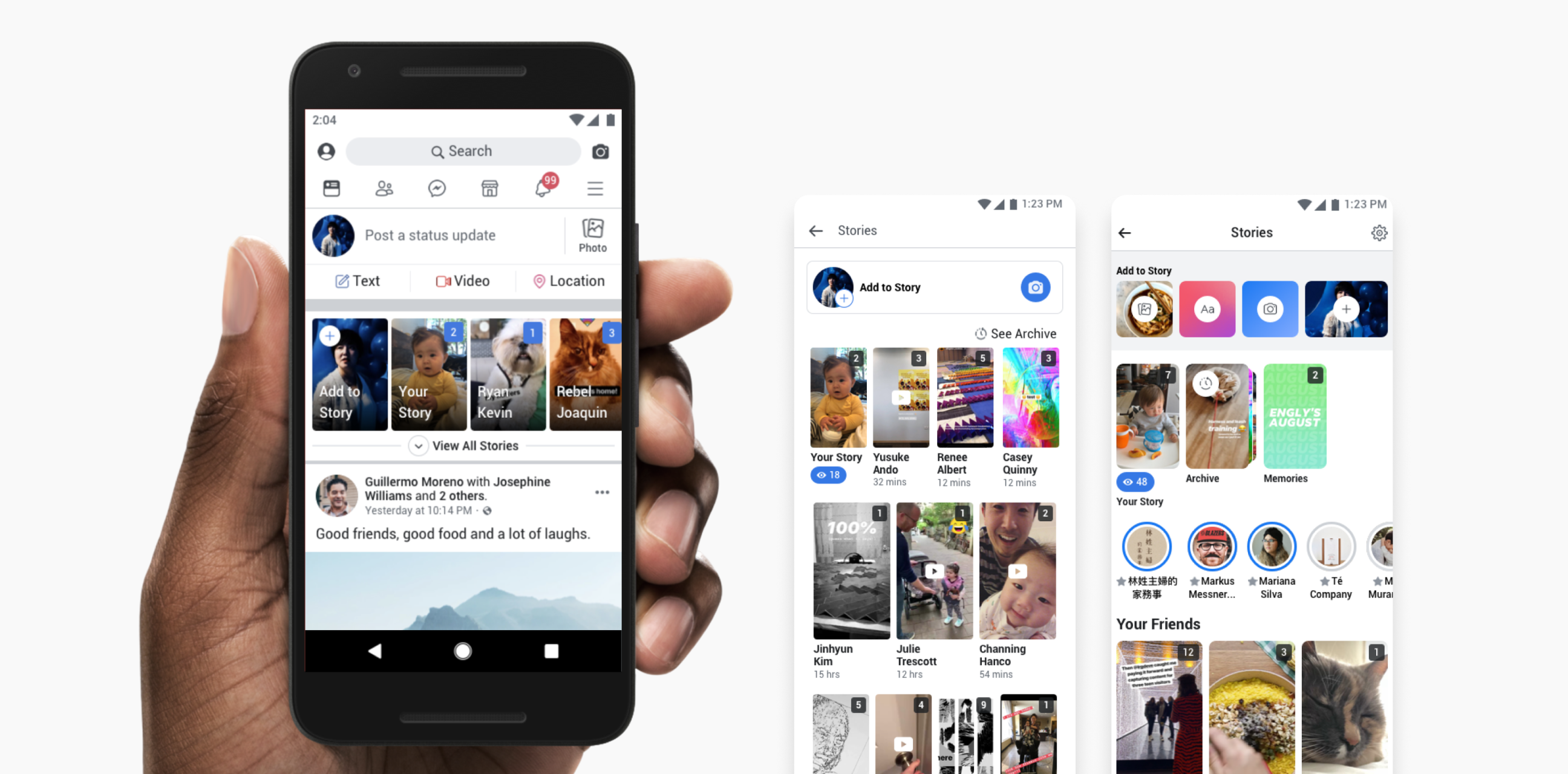
FB Stories is used daily by 1/3 of the world. Interfaces is FB Stories's multi-surface expansion strategy. I led design on FB Lite, web, Messenger and emerging wearable platforms. FB Lite is a lightweight interface on feature phones on Androids. It's optimized to run on phones with less processing, slower connection, and the app takes up little storage. It's so popular with the rest of the world outside of U.S., in fact, it's the second largest interface for Facebook.
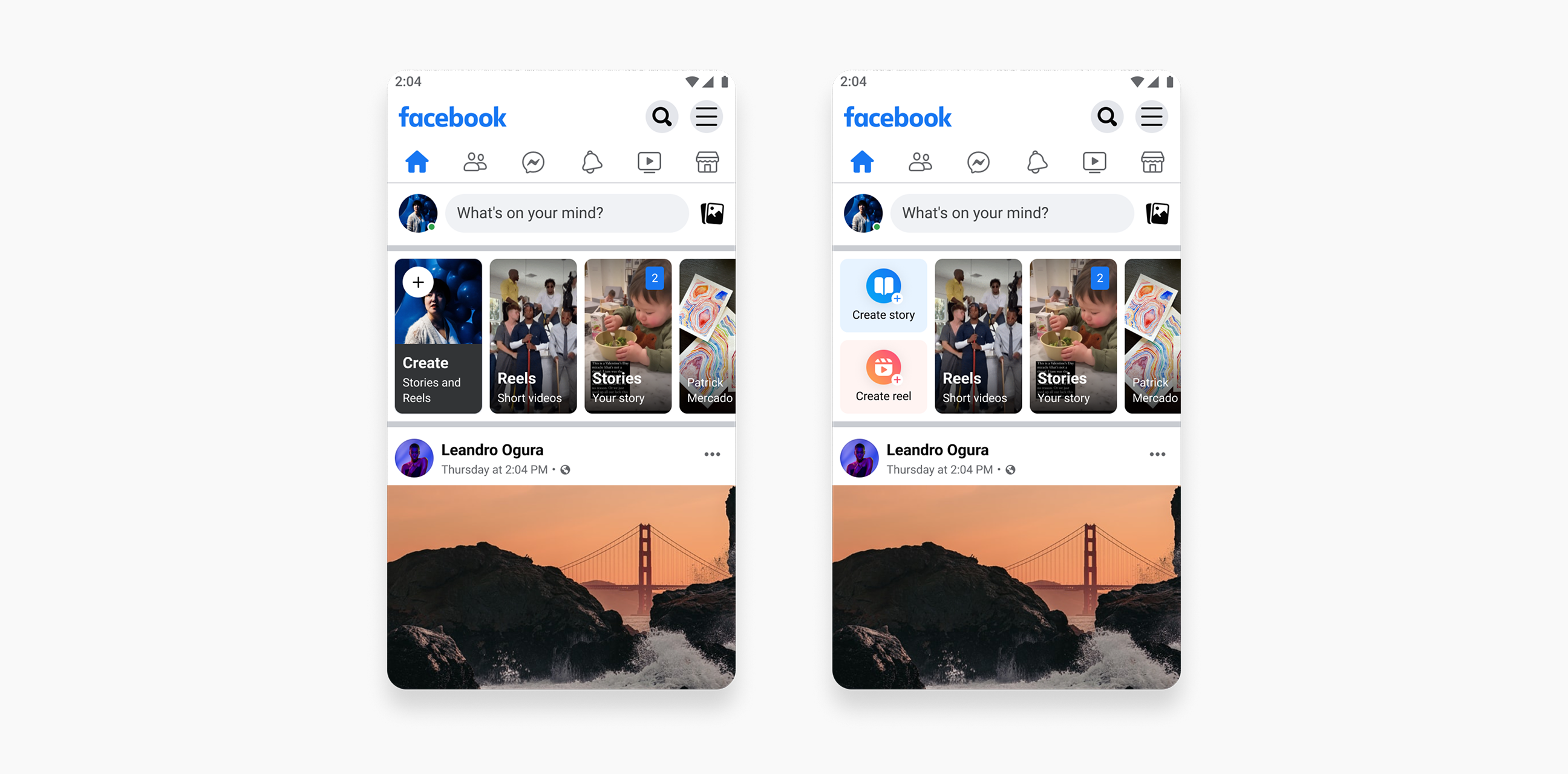
FB Lite: Top of Home
A project where we tested to bring a collection of content to top of home instead of just the Story tray.
Insight
7+ experiments
Each led to mitigation experiments that further gave us learnings on changes
What
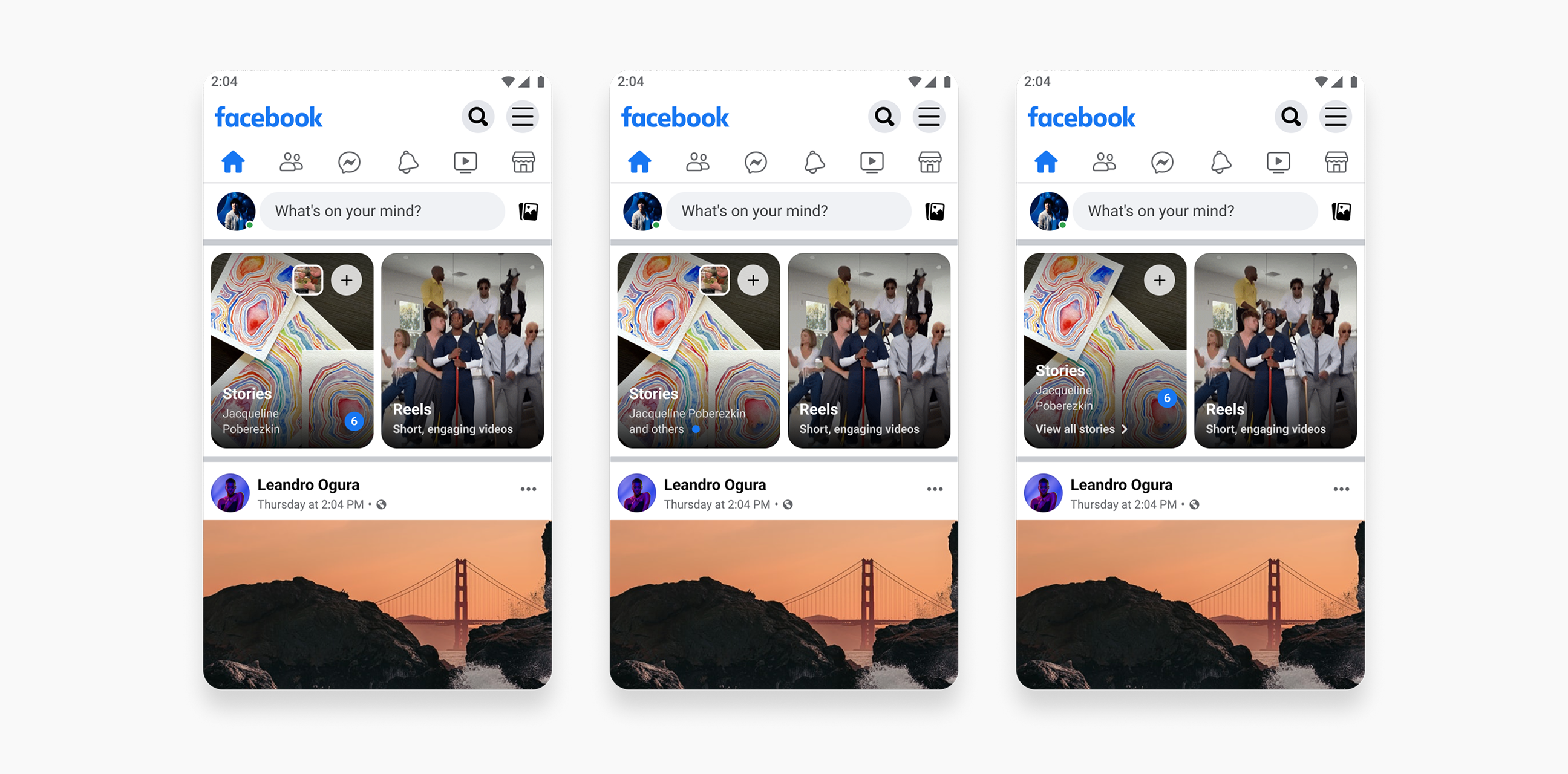
We first focused on bringing a Reels entry point to top of Home. Replacing the Story tray with a two card system, adding Reels to the mix. Stories tile shows options from full Stories features to most simplified UI.
Insight
The changes are too drastic and need to be dialed back
What
The next set of experiments dial back on replacing the entire Stories tray. They focus on understanding the implications of adding a Reels consumption entry point to the eco system while tweaking the prominence of Story creation.
Insight
When Reels replaces the first Story production tile, it reduces Stories production
What
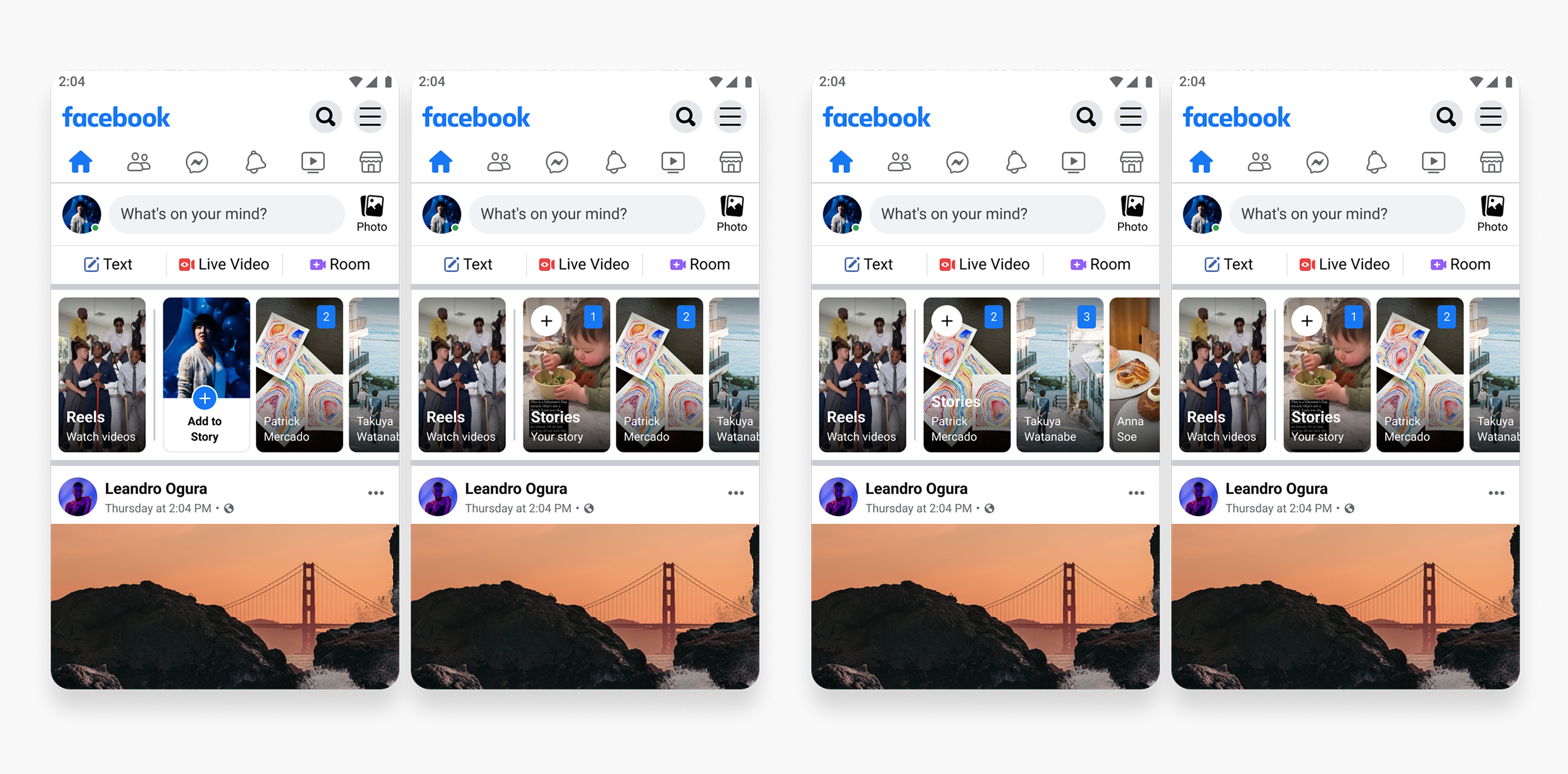
The following experiments aims to bring Creation back to the forefront of top of home in order to mitigate creation drop with the previous experiment.
At the end we didn't end up shipping any of the features due to too much negative impact on Stories.
What
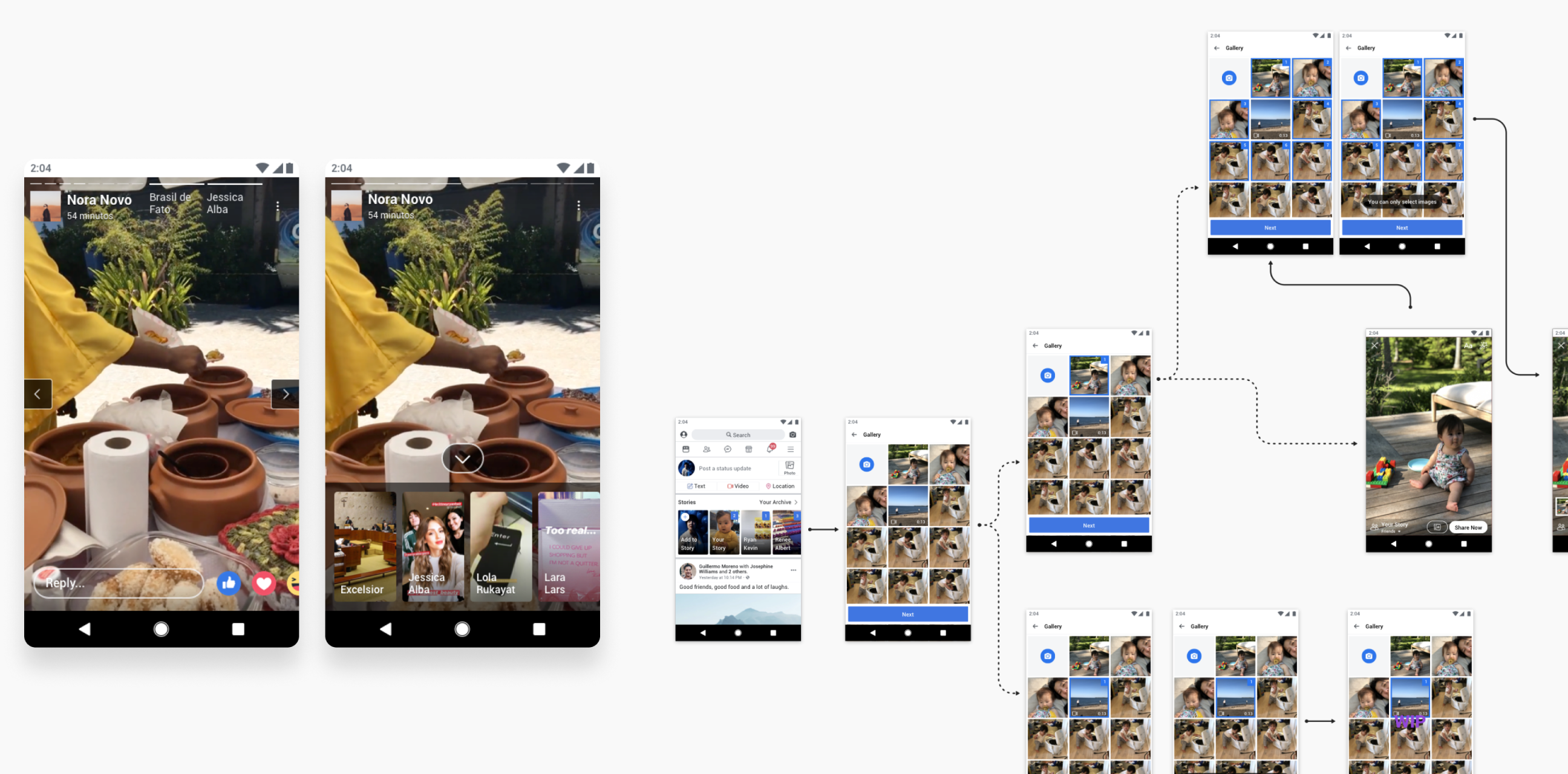
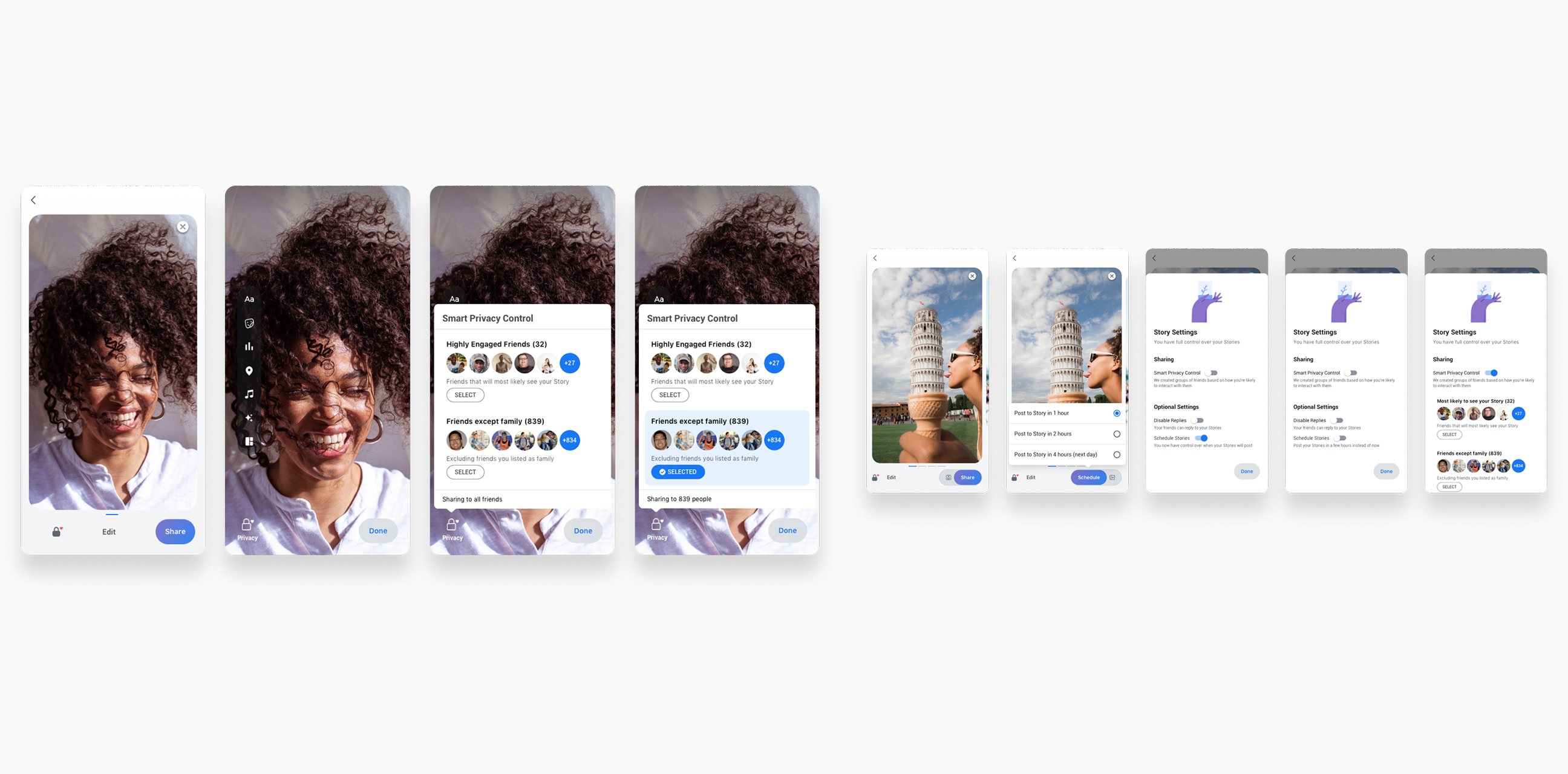
Over the years, we iterated on features like:
... and many more
Impact
+347MM
+1.365M
+347MM incremental views (vs. 180MM goal / 250MM stretch)
+1.365M incremental Original Exclusive Stories Production Daily (vs. 1M goal)